When bridge deck installation moves panel by panel, edge protection cannot afford to be an afterthought.
On the Eastern Freeway – Burke to Tram Alliance works, Transfloor decking panels were being installed onto a steel girder bridge structure.
The construction sequence was straightforward: each panel would be prepared, lifted by crane and placed alongside the preceding panel. The edge-protection challenge was less straightforward.
Once a panel reached the bridge deck, workers needed protection around the exposed edge. Installing the handrail only after the panel was in position would mean carrying out more of that work at height, before the area was fully protected.
The project team took a different approach. Fit the handrails while the panel was still on the ground. Then lift the protection with the panel.
That changed the sequence completely. Instead of treating edge protection as something to add after the structural element arrived, the handrail became part of the panel preparation and lift methodology.
At NON-DRILL, we think that distinction matters.
The project
The application arose during bridge deck works on the Big Build Eastern Freeway – Burke to Tram Alliance project, where Transfloor decking panels were being installed onto a steel girder bridge structure.
The project team needed an edge-protection method that would suit the panelised construction sequence. Each panel was crane lifted into position. As successive panels were installed side by side, the work front moved with them. That meant the temporary edge protection needed to move with the work as well.
The objective was not simply to find a handrail that fitted. It was to find a method that allowed the protection to become part of the installation sequence.
The challenge was really about where the work happened.
There are two ways to think about installing handrails on a bridge deck panel. The first is to lift the panel into position and then install the edge protection. The second is to fit the protection while the panel is still at ground level and lift the prepared panel into position.
Those approaches may end with a similar-looking handrail, but they create very different work methods. In this case, the project wanted to reduce the amount of handrail installation taking place at height and avoid relying on a scaffold-based installation method.
So the question became:
Can the edge protection be fitted before the panel leaves the ground?
That is where NON-DRILL came into the methodology.
Using the panel connection as part of the edge protection method
The Transfloor panels incorporated lifting anchors for crane handling. For the edge-protection methodology, anchor points were provided that allowed the NON-DRILL handrail system to connect to the panel. The NON-DRILL post connected to a 2.5 tonne cone anchor and handrails using a non-scaffold grub screw connection. That allowed labourers to fit the handrails while the panel remained at ground level.
Once dressed with the handrails, the panel could be crane lifted into position with the temporary edge protection already installed. The sequence therefore became: prepare the panel on the ground, fit the edge protection, lift the panel, place it on the bridge structure and continue the deck works behind the installed handrail.
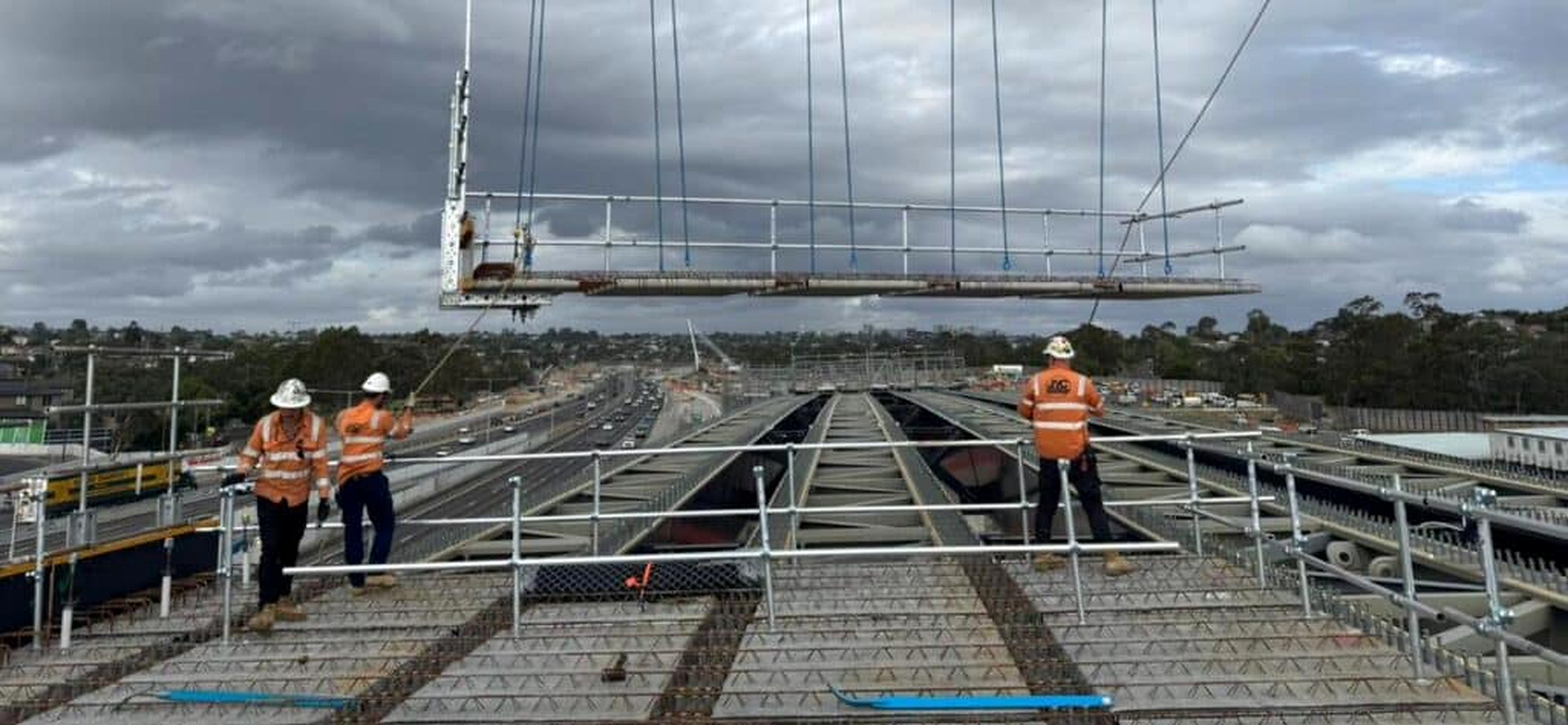
The interesting part is not simply the connection itself. It is what the connection allowed the project team to change.
Edge protection became part of the lift sequence
By moving the handrail installation to ground level, the project reduced the amount of edge-protection installation work that needed to occur after the panel reached the bridge deck.
The protection travelled with the structural element. As panels were positioned side by side and the deck progressed, the NON-DRILL handrail could be modified and relocated to suit the changing panel arrangement.
Workers could then carry out the flooring works from behind the handrail rather than first having to establish that protection after each panel had landed. This is the broader principle we think is worth paying attention to:
Temporary edge protection does not always have to follow the structure. Sometimes it can arrive with it.
That can change both the risk profile and the efficiency of the work method.
Why ground-level installation matters
On major infrastructure projects, small sequencing decisions can have a large effect on how work is delivered. If something can be assembled safely at ground level rather than installed at height, it is worth asking whether the construction sequence can accommodate that. Edge protection is no different.
In this case, the handrail was treated as part of panel preparation rather than as a separate activity that began once the panel had already reached the exposed work area. That gave the crew more control over the installation before the lift and reduced the amount of handrail work required on the bridge deck itself.
It also meant the protection was present when the panel entered the next stage of the construction sequence. For us, that is the real lesson from this application.
The connection made the sequence possible.
NON-DRILL is often discussed in terms of avoiding unnecessary drilling. That is important, but this project demonstrates something broader. The value of an engineered connection is not simply what it avoids. It is what it allows the project team to do differently.
Here, the cone-anchor connection allowed the handrail to be installed as part of the panel dressing process before the crane lift.
There was no need to drill new post fixings into the panel during the site installation sequence. More importantly, the connection supported a method in which temporary edge protection could be integrated into the way the deck was being assembled.
That is a much more useful way to think about edge protection.
Not: “Which post should we buy?”
But: “How can the edge-protection connection support the way we actually intend to build this?”
Documentation was part of the system
The installed hardware was only one part of the method.
Supporting documentation was also supplied for the project, including installation and removal guidance, certificates, third-party engineering lifting certificates and gate-design drawings. That matters because edge protection is not simply a physical product sitting on a concrete panel.
The connection, installation method, lifting sequence, documentation and approved project methodology all form part of the system. Or, as we say at NON-DRILL:
Compliance is a system, not a sticker.
A good edge-protection method needs more than a compliant component. It needs to work within the way the project is actually being delivered.
Could this approach work on panelised projects?
Potentially, yes. The principle is not unique to one bridge deck.
Where panelised or precast construction uses suitable compatible anchors, ferrules or other engineered connection points, there may be an opportunity to consider fitting temporary edge protection before the element is lifted into its final position.
But that does not mean the EBTA detail should simply be copied onto another project. Every application needs to be assessed against the panel design, available connections, loads, lifting methodology, construction sequence and approved project documentation.
The transferable idea is not the exact connection detail. It is the sequence. Ask whether the protection can be incorporated earlier.
The bigger lesson: design the protection into the work method
This project is a useful example of what can happen when edge protection is considered as part of constructability rather than procurement.
The problem was not solved by waiting until the bridge panel was in place and then asking how to protect the edge. The project looked at the panel, the connection and the lift sequence together.
That allowed the handrail to be fitted before the panel reached height. And that is the principle we think more Project Engineers and Temporary Works teams should consider: If edge protection is going to be required immediately after an element is installed, ask whether it can be fitted before the element gets there.
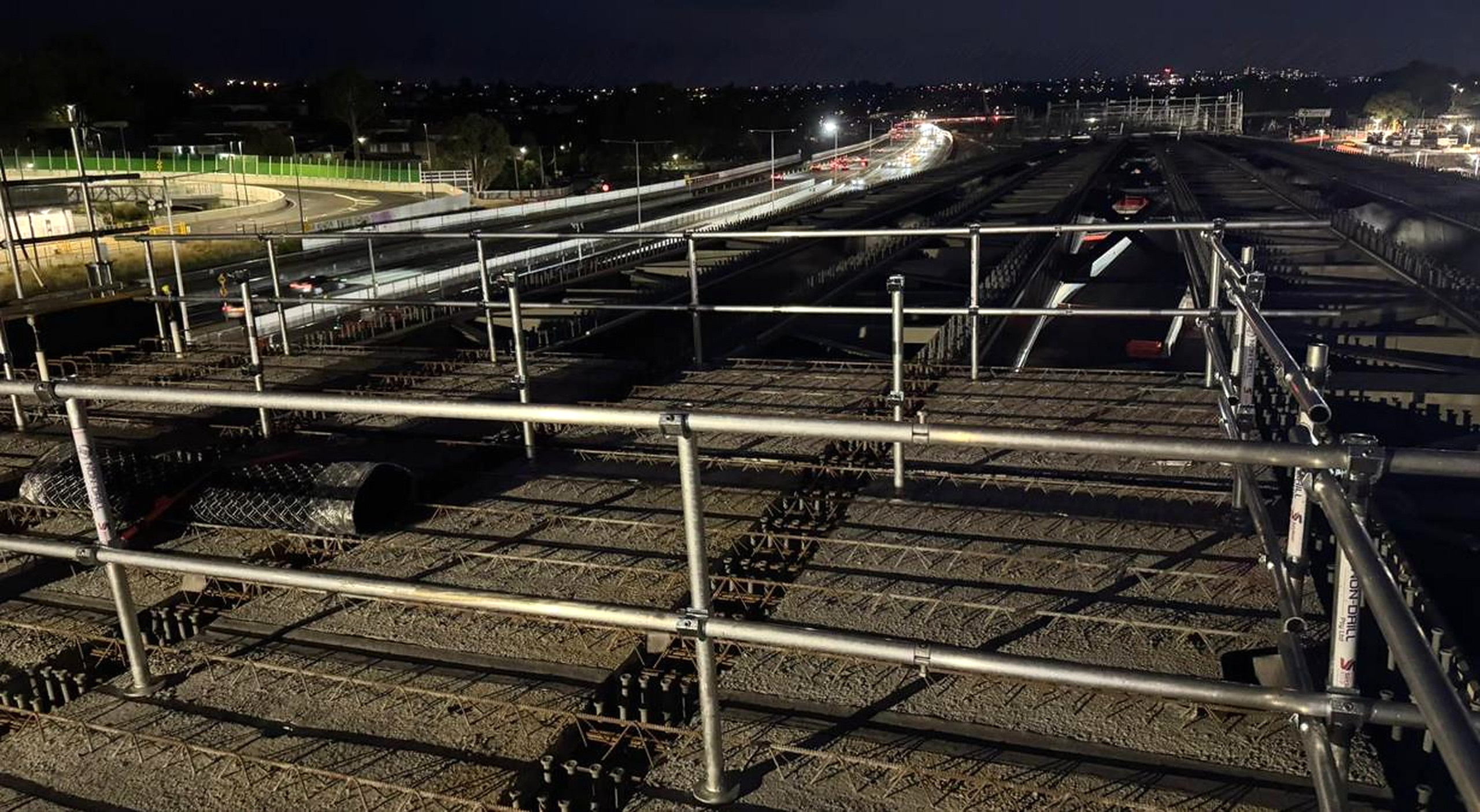
Sometimes the answer will be no. Sometimes another system will be more appropriate. But when the structure, connection and lift methodology allow it, moving the work to ground level can create a much better installation sequence.